How Many Cabinets Should a Kitchen Have?
No matter the size of your kitchen, when you’re looking to remodel the space or to add cabinets, there are some common questions you can ask yourself.
You will need to think about how much you have to store in your kitchen, and whether this is likely to change. You’ll also need to consider how you use your kitchen.
Think about how much cooking or entertaining you do and where you need the things you want to access most frequently in your kitchen.
Once you have surveyed your kitchen’s uses and answered these questions, then you can decide on the number of cabinets you will need.
Number of Cabinets for a Large Area
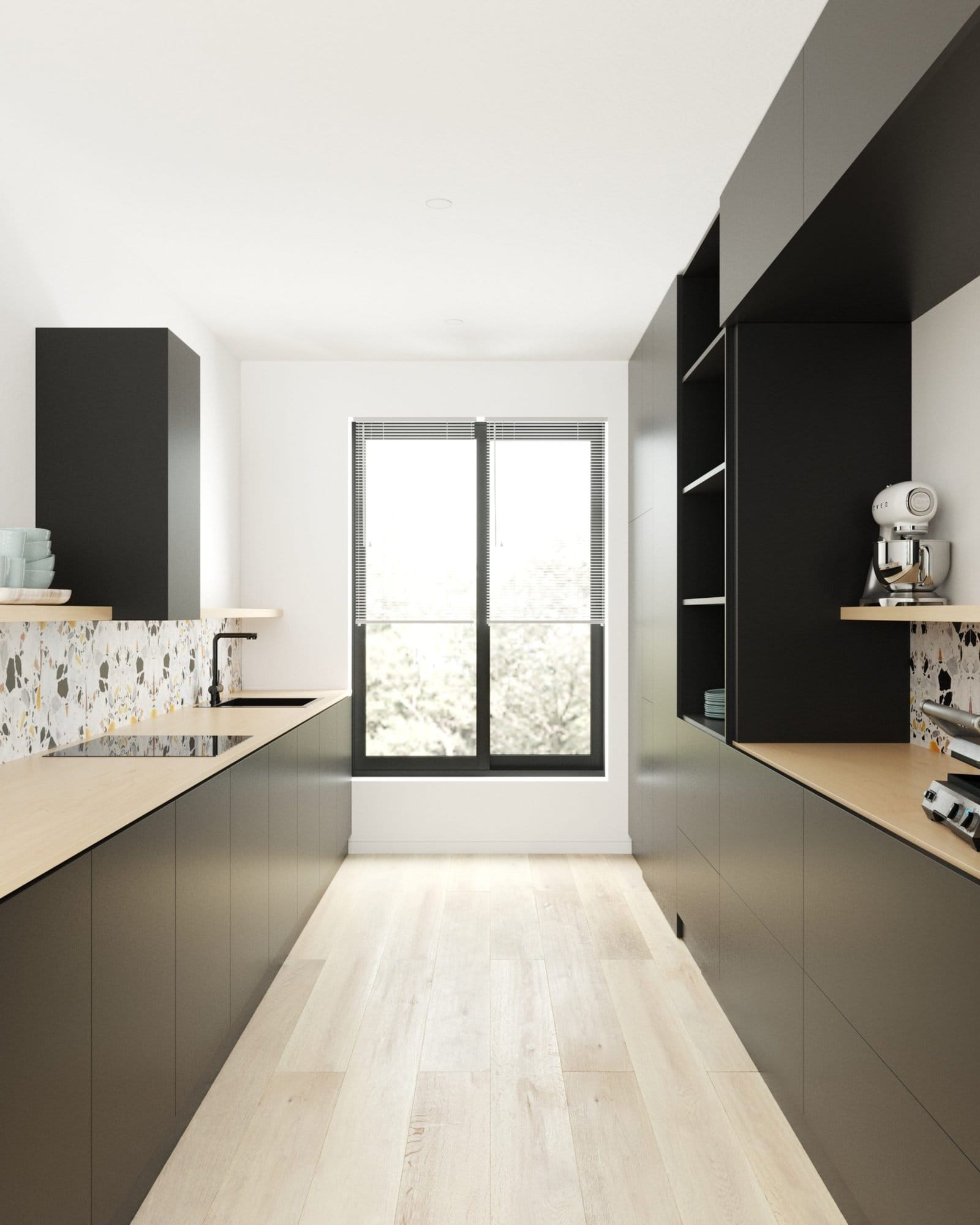
If you have a large kitchen then you will have a good deal of flexibility as to how you arrange your kitchen cabinets.
First take a look at the space you have. If you have old cabinets in situ, it may help to make a floorplan or use a design software package to strip back to the bare walls.
You need to think about the items you most often need to get to and where best to store them. Then decide if you want base cabinets only or if you have a lot of kitchen items that you will also need wall cabinets.
To decide on the number of cabinets you’ll need, check the cabinet sizes of your chosen kitchen and then mark out how many cabinets each wall could take.
There are standard kitchen cabinet sizes which are a standard height of 34.5-inches (36 inches with countertop), a depth of 21 or 24 inches and the width can vary from 12 to 42 inches, with the average being 24 inches wide.
How to Configure a Small Kitchen
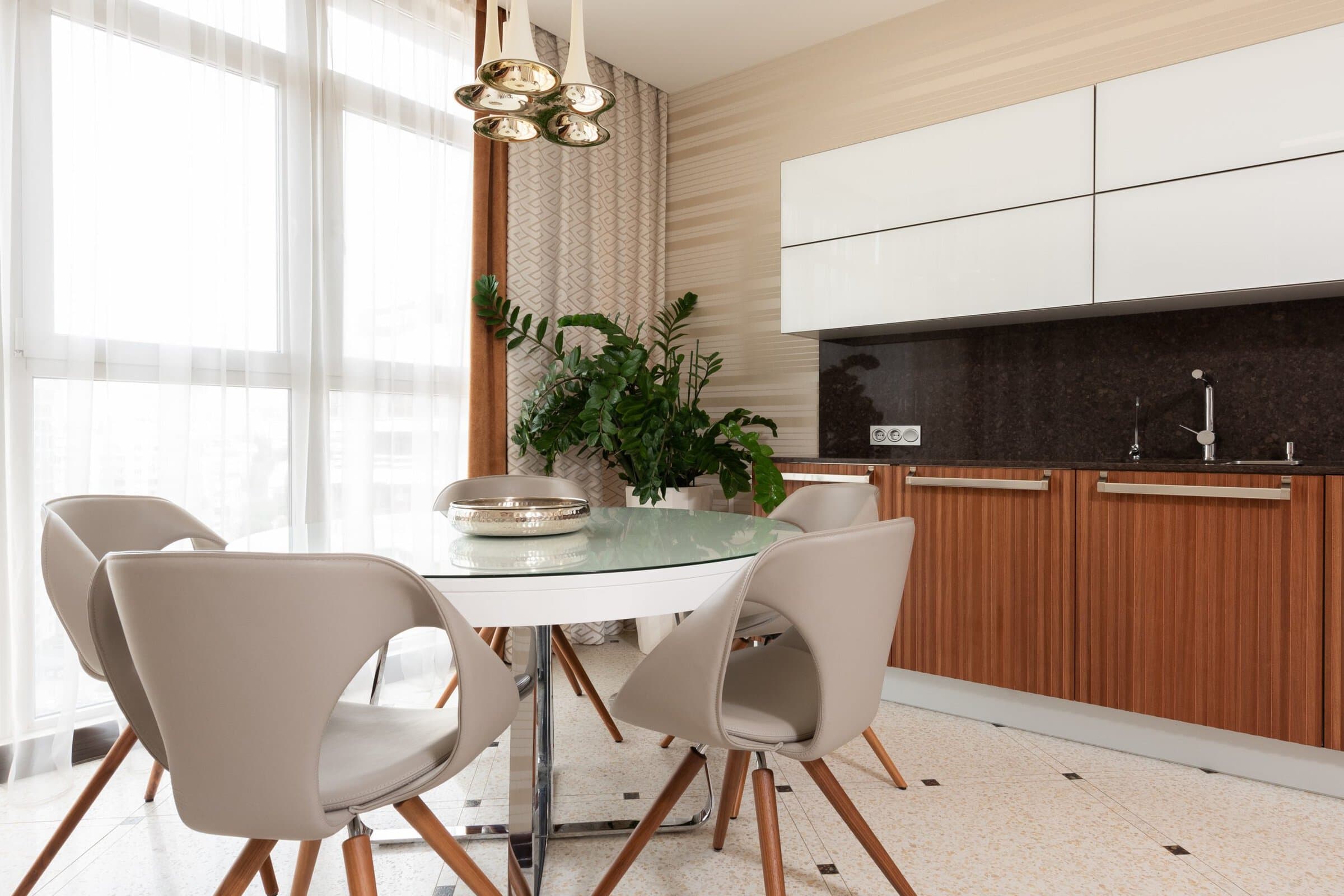
In a small kitchen, to best use the space you can add cabinets to one wall so that the room does not feel cramped. If you do a lot of cooking you may need as much storage as you can fit. But if you’re more about microwave meals for one, you won’t need so much.
Using large wall and base cabinets will mean you make use of nearly all the space while taking up only one wall. A small kitchen might have four base units and four wall units. This leaves space for a small dining table.
Utilize the Space
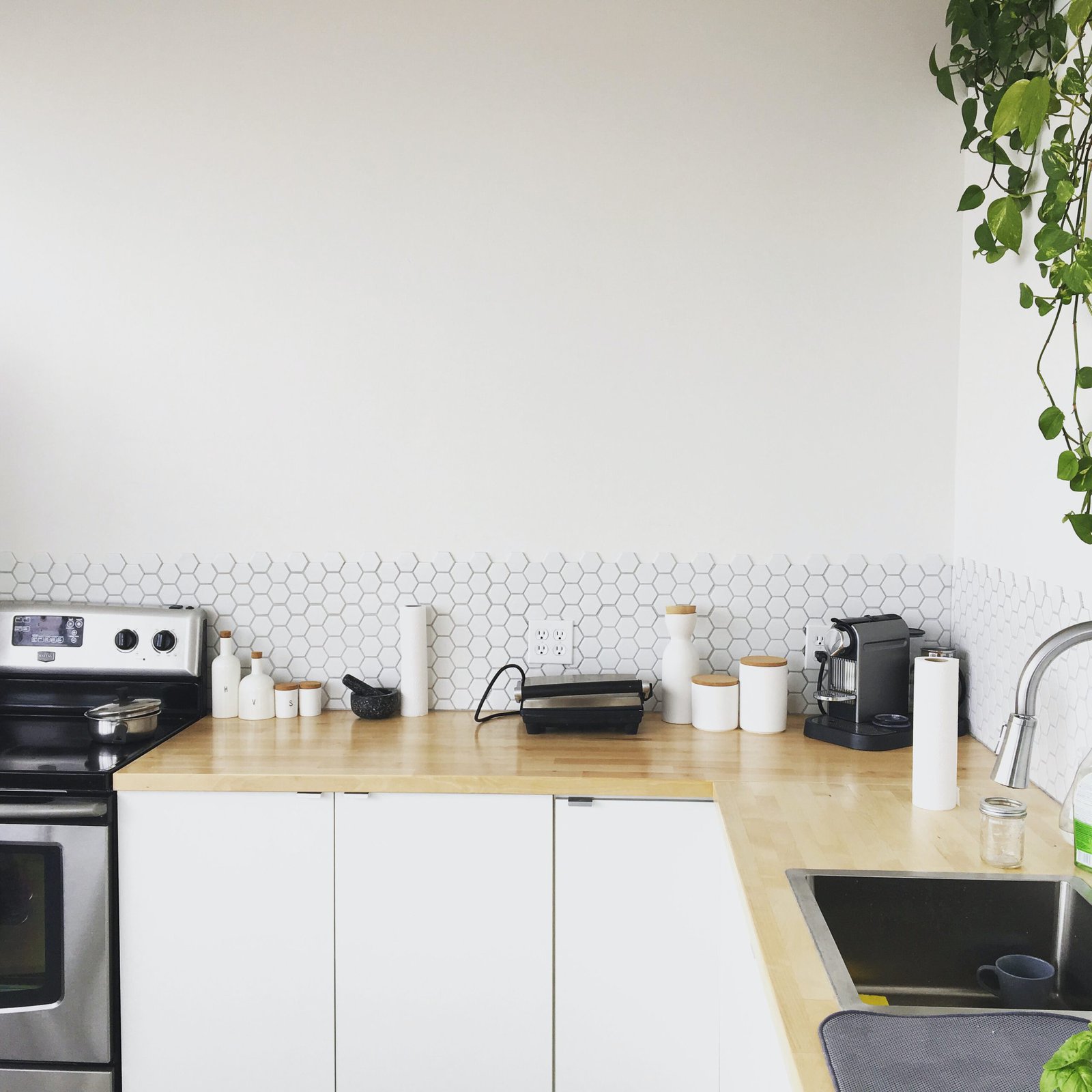
If you have just moved into your first home and don’t have too much stuff, or you just don’t like to fill cabinets unnecessarily, then you might go for a base cabinet only option.
When you make these decisions ask yourself if the number of people at home is likely to increase or decrease.
For example, you are planning on starting a family and will have more mouths to feed, or you have a relative who may need to move in with you. Or you know that your kids will be off to college or leaving home in a year or two and you won’t need as much storage.
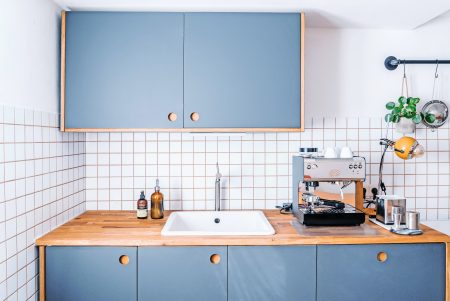
Allowing maximum light and space in a small area, white painted walls are clean and crisp. This is a perfect look for minimalists, in every sense of the word.
You will probably find that six to eight cabinets over two walls will provide the storage you need. And you can always add shelves to the wall if you need a little additional storage.
How Many Cabinets Across a Kitchen Wall?
If you want to maximize the storage across one wall, the answer is you will need a lot of cabinets!
In today’s modern kitchens you can have an integrated or recessed fridge and a built-in oven. Place these two appliances on the wall first in your plans, then you can then fill in the gaps entirely so long as you have an island or another wall for your hob and sink.
Floor to ceiling cabinets with an average height ceiling on a 10 to 12 foot wall will take around fourteen cabinets. How’s that for maximizing your capacity?!
The Advantages of Bespoke Kitchen Design
Using a professional kitchen designer means you will have someone dedicated to finding the best cabinet solutions for your kitchen whilst offering unusual ideas you might not have considered.
Your designer or carpenter will know how best to use every inch of space, suggesting narrower cabinets for nooks and crannies. They’ll be able to suggest where you have drawers and where you have cabinets with doors, as well as helping you choose colors and hardware.
How Many Cabinets in a Sustainable Kitchen?
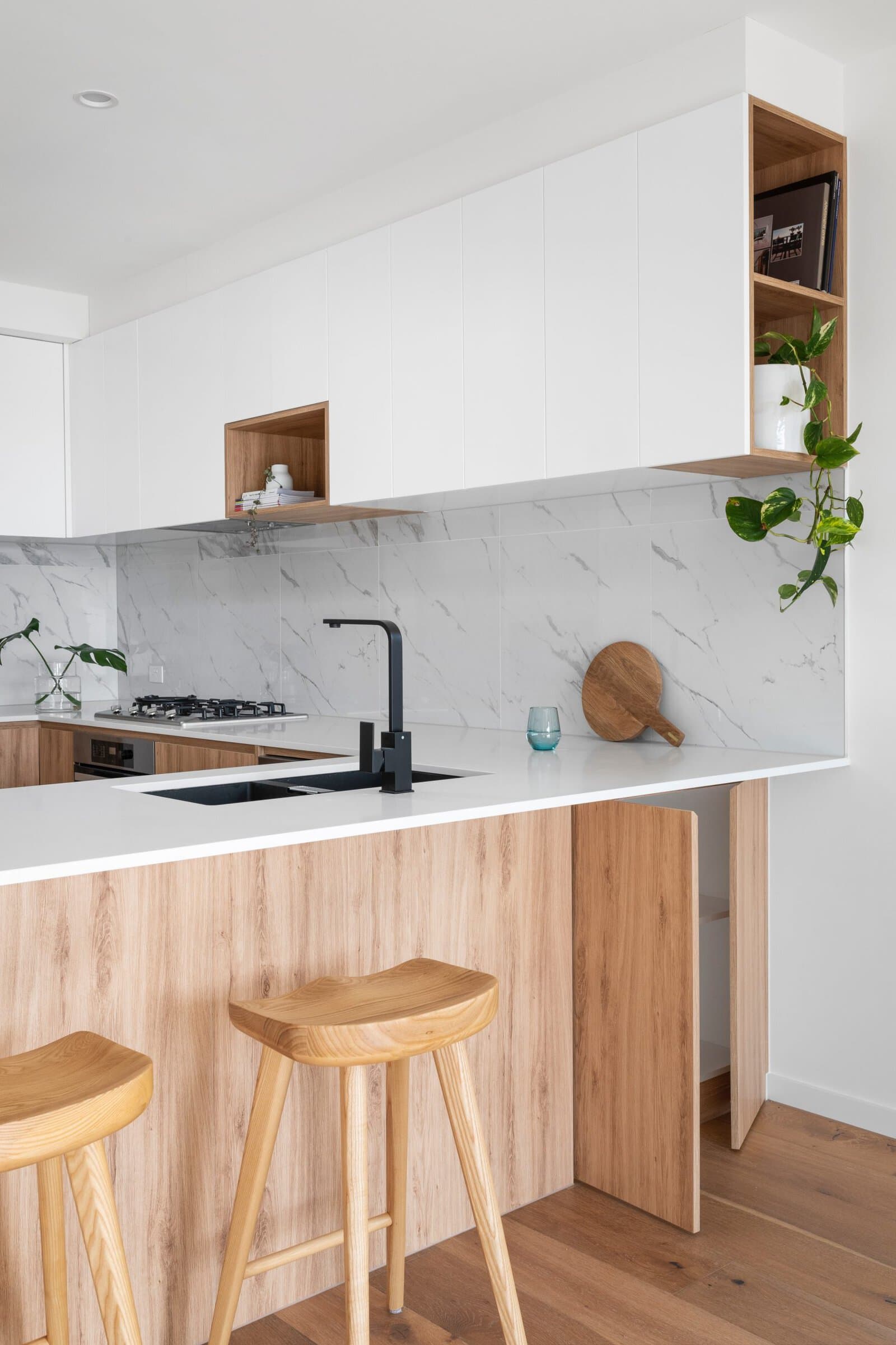
In a sustainable kitchen there are two factors you’ll be thinking about. The first is how you cook and eat to use minimal food, minimal energy and to have very little waste. And linked to this not having unnecessary gadgets or plastic dishes taking up space.
The second is the materials you choose. An untreated natural wood is a good sustainable choice, especially if made by a local supplier with local timber.
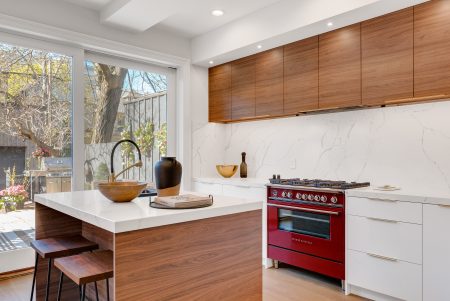
You can maximize your space by adding cabinets under an island and by keeping the design neat and simple.
Can You Have No Kitchen Cabinets?
For a zero waste, sustainable kitchen, you’re likely to want more shelves than cabinets and keep your dishes on display. This is a boho look that is perfect if you love your unusual plates and bowl.
As you’ll be more likely to buy materials in recyclable packaging, you may have lots of glass canisters you can decant your dried goods into and can instantly see the contents.
If you’re design minded, you may like to have a cabinet or two to put away less attractive cooking equipment or cleaning products.
In Closing
The number of cabinets you will have in your home will depend upon the size of the kitchen and also how you use your kitchen. If you do a lot of cooking, you’re more likely to need more equipment and utensils, as well as having more food to store.
Looking at every inch of potential space is a good way of choosing the number of cabinets. For example you can fill a whole wall with cabinets.
Then if you have an unusual or awkward shaped kitchen it may be more employing the services of an expert who can best advise on your cabinet configuration.
With a few design tricks you can install the ideal number of kitchen cabinets for your space.